Crime State: Block City RP
- 4.4
- Rating
- 100.00K
- Installs
- Free
- Price

 Analysis by App-foxy
I approached Crime State: Block City RP as the kind of game that can turn a spare phone into a shared little playground. It is a role-playing game built around an online block-city setting, driving, action, and multiplayer interaction. That combination makes it easy to imagine one person using it for a quick solo session while someone else in the household watches, suggests what to do next, or takes a turn later.
My first impression was that its appeal comes less from a single tightly scripted mission and more from the freedom to create a routine inside a busy city. You can treat it as a driving game, an action game, or a social role-playing space depending on your mood. That flexibility is useful on a shared device, although it also means the experience is not as focused as a traditional story-led role-playing game.
How it works as a shared household game
For a realistic household scenario, I can see this working best during short breaks. One person might spend time exploring the city and racing, then hand the device to another player who wants to try the action side. Because the game presents several activities rather than one narrow objective, a younger player interested in vehicles may enjoy a different part of it from an older player who prefers multiplayer role-play.
You May Also Like

 AccuWeather: Weather Radar
AccuWeather Review: A Quick, Clear Forecast for Everyday Decisions
For everyday plans, the best forecast is the one you can understand quickly. AccuWeather makes rain timing, radar, and local conditions easy to act on, with a few trade-offs.

 Hill Climb Racing
Why Hill Climb Racing Still Turns Crashes Into One More Run
A tiny car, a bumpy hill and one more upgrade: Hill Climb Racing keeps resurfacing because its simple chaos makes every near-miss feel personal.

 AliExpress - Shopping App
AliExpress Makes Global Shopping Feel Personal, but Shoppers Bear the Risk
AliExpress turns a global marketplace into a pocket-sized discovery engine. Its reach is useful, its shopping loop compelling, and its trade-offs easy to miss.

 Lords Mobile: Kingdom Wars
Lords Mobile Is a Kingdom-Building Routine, Not a Quick Match
A case-by-case verdict on the building, battles, device demands, and social commitments that make Lords Mobile rewarding for some players and exhausting for others.

 PDF Scanner app - TapScanner
TapScanner Makes Paperwork Easier to Capture, Check, and Share
TapScanner makes scanning with a phone feel less like a rescue operation and more like a dependable step in getting work done. Its capture tools are useful, though not flawless.

 Block Blast!
 Shows How Much a Puzzle Game Can Leave Out
A quiet grid game shows why puzzle players increasingly value instant clarity, repeatable skill and low-pressure play—and where the genre still needs to catch up.
More From Our News Desk
View All News


That variety is one of the strongest reasons to try it. I did not feel locked into one style of play. If driving became repetitive, I could shift attention toward the city and its role-playing possibilities. If online interaction felt too demanding, a player could simply use the session as a casual action and racing experience. The trade-off is that people looking for a carefully paced campaign may find the open format less satisfying.
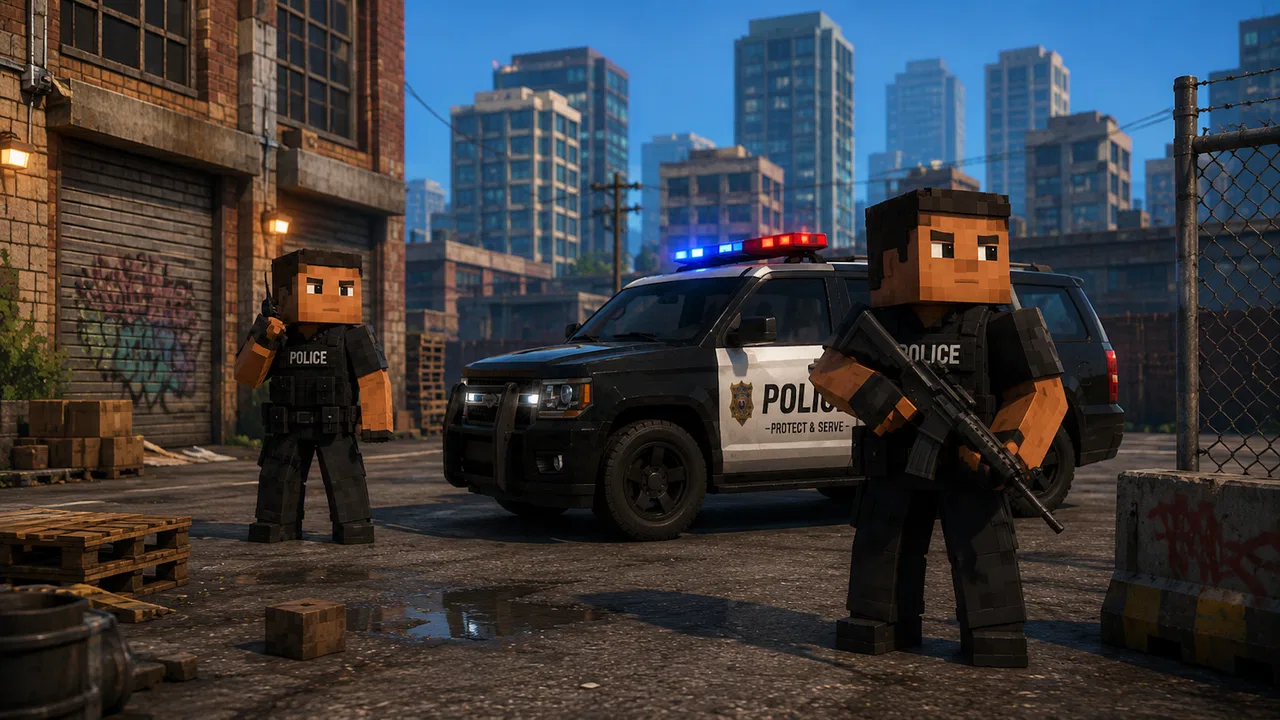
The block-based visual identity also helps make the world approachable. It gives the city a playful look rather than aiming for realism, which suits shared use because the presentation is easy to understand at a glance. Still, the crime-themed setting and action focus are important context for adults deciding whether it fits a particular player. The age guidance is Everyone 10+, so I would treat that as a useful starting point rather than handing it automatically to every child.
What makes the game easy to pass around
A useful habit is to decide what the next player is actually trying to do before passing over the device. One player can focus on finding a good route or getting comfortable with driving, while the next can approach the same city with a role-playing goal. This avoids the common shared-game problem where everyone grabs the phone but nobody knows what to do.
I also found that the open-city design rewards small personal challenges. Instead of expecting a long uninterrupted session, I would set a simple target such as exploring a new area, improving control of the vehicle, or spending a few minutes observing how multiplayer interaction feels. These goals make the game easier to enjoy in a household where playtime is interrupted by meals, homework, or other responsibilities.
There is a less obvious drawback here: multiplayer can change the tone quickly. A session that feels relaxed when playing alone may become more intense when other people are involved. On a shared device, that means the person waiting to play may be affected by the previous session’s mood, even if they were not part of it. I recommend treating online play as an activity that deserves a little attention, not as background entertainment for very young users.
Keeping setup and expectations clear
The game is free to install, which removes the biggest barrier to trying it as a household activity. It runs on Android devices using version 8.0 or later, so compatibility is worth checking before planning around it. The current version is 1.004, and the developer is NOVA GAMES LLP.
Free entry does not mean every part of the experience is cost-free. In-app purchases range from $0.99 to $239.99 per item, a spread that deserves a clear conversation before the game is used on a shared phone or tablet. I would not leave purchasing decisions vague. The safest household routine is to agree in advance that nobody buys anything without asking the device owner.
This matters especially when several people use one device. A child may think a purchase is simply another way to continue playing, while the account holder sees it as a real charge. I would explain that the game can be enjoyed without treating every attractive option as necessary. That boundary is more practical than relying on excitement or good intentions in the moment.
Another useful setup boundary is deciding who gets priority when the device is needed for something else. An online game can make “just one more minute” feel reasonable, particularly when a race or interaction is already underway. In my experience, agreeing on a stopping point before starting is more effective than trying to end the session during a tense moment.
Account boundaries matter more than the device
A shared phone does not automatically create a shared game identity. I would keep the account owner and payment responsibility clear, and I would avoid assuming that every player understands what is attached to the device. Before letting someone else play, it is sensible to check which account is active and whether the person using it knows that their actions may affect the same game environment as the previous player.
I would also avoid presenting the game as a private space for a child simply because the device belongs to the family. Its online multiplayer element means the experience is social by design. A parent or guardian should decide whether that kind of interaction fits the player’s age, maturity, and household rules. The official Everyone 10+ guidance supports a family discussion, but it does not replace one.
For older children and teenagers, the most helpful approach is usually practical rather than dramatic. Explain what information should never be shared, why strangers online are still strangers, and what to do if an interaction becomes uncomfortable. These are sensible habits for any multiplayer game, but they are particularly relevant here because the city setting encourages players to spend time around other people rather than simply completing isolated puzzles.
Coordinating play without turning it into a chore
Coordination works best when each person has a different reason to play. I would let one household member explore the driving side, another test the action elements, and a third decide whether the role-playing atmosphere is enjoyable. This creates a natural rotation and prevents every session from becoming a competition over the same activity.
A simple handover can help: say what you were doing, what you discovered, and what you planned to try next. That small explanation gives the next player context without pretending that the game needs a formal family schedule. It also reduces frustration when someone opens the game and feels lost in the city.
For multiplayer sessions, I would agree on whether the goal is cooperation, casual exploration, or competition before starting. Those are very different expectations. Someone seeking a relaxed drive may not enjoy being pulled into a high-pressure action situation, while a player looking for excitement may find a quiet exploration session dull. The game’s flexible identity is a strength only when the group agrees on how to use it.
One of my more useful tips is to treat the device handover as a reset point. Take a moment to check the remaining battery, close unrelated apps, and make sure the next player knows whether the session is intended to be private or social. This is not a special feature of the game, but it makes a noticeable difference when an online title is used by several people under the same roof.
Age, trust, and the crime-themed setting
The title and setting make the game’s tone clear: this is not a gentle building toy or a purely decorative city tour. It combines crime-themed role-play with action and racing, so I would judge suitability by the individual player rather than by the block-style graphics alone. A child who handles fictional conflict comfortably may be fine with it, while another child of the same age may prefer something calmer.
The Everyone 10+ rating gives families a useful reference point, but trust still has to be earned through normal supervision and conversation. I would pay attention to how a player reacts after multiplayer sessions, whether they understand the difference between fictional behavior and real conduct, and whether they can stop without becoming overly upset. Those observations tell me more than the visual style by itself.
For a household with younger children, I would not choose this as an automatic first multiplayer game. The online setting and crime-action theme create more context to explain than a simple offline puzzle. For a mature preteen or teenager who already understands basic online boundaries, it may be a reasonable shared option, especially if an adult remains available for questions.
The same point applies to adults. A parent who enjoys driving and open-city action may have fun playing alongside a teenager, but I would not assume that shared play removes the need for boundaries. In fact, playing together can reveal differences in tolerance for competition, fictional violence, and online interaction. That is useful information, provided the conversation stays open.
Where it fits among role-playing alternatives
Compared with a conventional role-playing game built around dialogue, character progression, and a fixed story, this one appears more immediate and activity-driven. Its strongest appeal is the combination of city exploration, racing, action, and multiplayer. If I want a game that gives me a clear narrative path and carefully planned character development, I would choose a more traditional role-playing alternative instead.
Compared with a pure racing game, it offers a broader setting and more social possibilities. Someone who only wants precise track competition may find the extra city and action elements distracting. On the other hand, a player who likes moving between activities may appreciate not having to leave the game whenever the mood changes.
It also differs from a quiet offline sandbox. The online component makes the world feel more active, but it introduces the need for better supervision and clearer account habits. For a family seeking a game that can be played without any social considerations, an offline alternative would be the simpler choice. For a group that enjoys sharing discoveries and discussing what to try next, the multiplayer direction is more appealing.
That comparison helps explain why I see this as a flexible household game rather than a definitive role-playing experience. It sits between several categories. The benefit is variety; the cost is that none of those individual areas necessarily receives the same focused attention as a specialist game.
Performance, spending, and everyday friction
The game has attracted a 4.4 average from 855 ratings and has passed 100K+ installs, which suggests that it has found an audience beyond a tiny experimental release. I would still treat those figures as a reason to investigate, not as proof that it will suit every device or every player. Shared-device use adds its own practical questions, especially around storage, battery, and who is allowed to continue an online session.
The free price makes experimentation easy, but the purchase range means adults should take the financial side seriously. I would begin with the free experience and watch how the household actually uses it before considering any optional spending. If the game is mostly opened for occasional driving, purchases may add little value. If someone becomes deeply invested in the role-playing side, the temptation to spend may be stronger, which is exactly when a pre-agreed limit matters.
Another friction point is attention. A multiplayer city game can be engaging enough that a player loses track of time, while a shared device creates pressure for the next person waiting. I would use short, agreed sessions rather than letting access remain open-ended. This is especially important when the phone is also needed for communication, schoolwork, or practical household tasks.
The game is labeled free and intended for Everyone 10+, but those two facts should not be confused. Free describes the entry price, not the household cost of every possible choice. The age label describes broad suitability, not a promise that every family will find the tone comfortable. Those distinctions are central to deciding whether it belongs on a shared device.
Who should try it first
I would recommend giving it a fair trial to households where at least one player enjoys driving and another likes open-ended action or multiplayer role-play. It is also a good candidate for someone who gets bored when a game insists on one fixed route. The ability to shift between city activity, racing, and social play gives the sessions a useful sense of choice.
It is less suitable for a player who wants a quiet, private, offline experience with no account or spending discussions. I would also skip it for a family that expects a polished story to guide every minute. In that situation, a narrative role-playing game or an offline adventure would probably feel more rewarding and easier to manage.
For a shared household, I would start with one supervised session. Let the intended players take turns, discuss the tone, and decide whether the multiplayer side feels comfortable. Watch whether the game creates conversation and cooperation or simply arguments over control of the device. That first session will tell you more about its fit than the block-city presentation alone.
My household verdict
My overall view is positive but measured. Crime State: Block City RP has a useful mix of driving, action, city exploration, and online role-playing, making it more adaptable than a narrowly focused game. Its free entry and support for Android 8.0 or later make trying it straightforward, while the current version, 1.004, gives prospective players a clear point of reference.
I would recommend it to a household that can set simple rules around turns, multiplayer behavior, accounts, and purchases. The game works best when everyone understands what kind of session they are starting. It is not the right pick for families seeking a completely offline or story-first experience, and the crime-themed online setting deserves more thought than the playful visuals might suggest.
For me, the deciding factor is whether the household values flexible shared entertainment more than a tightly directed role-playing campaign. If the answer is yes, this game can provide an enjoyable common activity, especially when players give one another room to explore different parts of the city. If the answer is no, a specialist racing game, offline sandbox, or traditional story RPG will likely be a better match.
In short, I see it as a game worth trying with clear expectations rather than an automatic recommendation for every age group or device user. Start free, keep spending boundaries visible, talk about multiplayer trust, and let each player decide whether the mix of racing, action, and role-play holds their attention. That approach gives the game its best chance to become a fun shared option instead of another source of household friction.
FAQs for Crime State: Block City RP
01What type of game is Crime State: Block City RP?
Crime State: Block City RP is an open-world role-playing game set in a blocky, pixel-art city. Players can engage in various activities such as missions, heists, and exploring the vast urban environment. The game focuses on crime-themed adventures, allowing players to build their reputation and navigate a dynamic cityscape.
02Is Crime State: Block City RP free to play?
Yes, Crime State: Block City RP is free to download and play. However, it contains in-app purchases that allow players to unlock additional features, items, and customization options. These purchases can enhance gameplay but are not necessary to enjoy the core experience of the game.
03What platforms is Crime State: Block City RP available on?
Crime State: Block City RP is available for both Android and iOS devices. You can download the game from the Google Play Store for Android or the Apple App Store for iOS. Ensure your device meets the minimum system requirements for optimal performance.
04Does Crime State: Block City RP require an internet connection?
While Crime State: Block City RP can be played offline, certain features require an internet connection. Online connectivity is essential for accessing multiplayer modes, syncing progress, and participating in special events. Playing offline limits some functionalities, but the core gameplay remains accessible.
05Are there any age restrictions for playing Crime State: Block City RP?
Crime State: Block City RP is rated for mature audiences due to its crime-related themes and gameplay. It may contain violence, strong language, or suggestive content. Players should be aware of these elements, and parental guidance is recommended for younger players interested in the game.
Pros
- Immersive open-world environment.
- Customizable characters and vehicles.
- Engaging storyline with missions.
- Multiplayer mode for real-time interaction.
- Regular updates and new features.
Cons
- In-app purchases can be pricey.
- Occasional server connectivity issues.
- Graphics may not suit all devices.
- Some in-game ads can be intrusive.
- Limited offline gameplay options.

Crime State: Block City RP
Gallery